
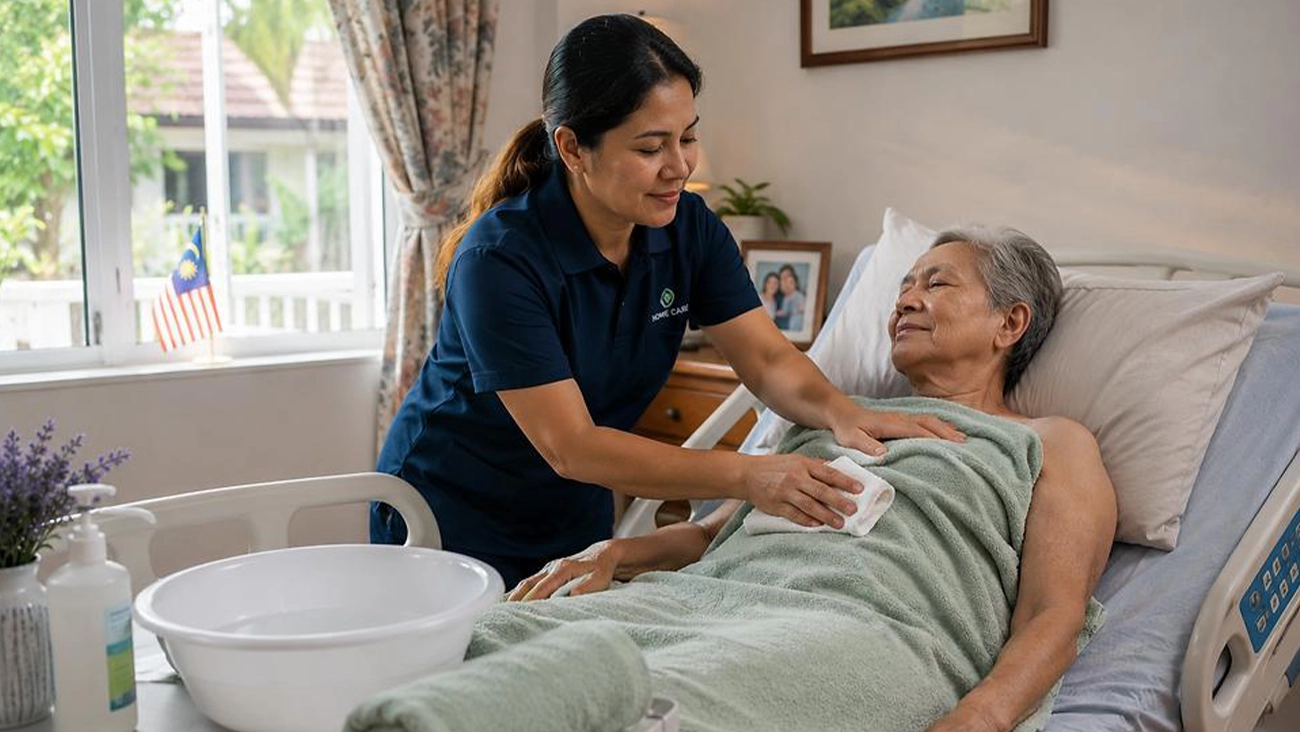
For someone who cannot move independently, daily hygiene is about much more than cleanliness. It supports comfort, skin health, dignity, and emotional well-being.
Bathing a patient in bed
The method depends on the patient’s mobility, energy level, and medical condition. Some people can participate in parts of their own care, while others require full assistance.
A comfortable room temperature, gentle cleansing products, careful drying of skin folds, and avoiding unnecessary friction are important.
Changing sheets without getting out of bed
Bed linen can often be changed while a patient remains in bed, using appropriate repositioning techniques. The patient’s safety, comfort, and any movement restrictions must be considered.
Fresh linen should be dry, smooth, and free of folds. Patients with recent surgery, fractures, catheters, or feeding tubes may require specific handling precautions.
Protecting the skin
Moisture, pressure, and friction may increase the risk of skin damage. Good hygiene helps, but pressure injury prevention also requires regular skin checks, pressure relief, appropriate repositioning, and suitable equipment.
Persistent redness, broken skin, or increasing pain should be assessed by a healthcare professional.
Respecting privacy and dignity
Personal care should be explained in advance, carried out with consent, and organized to preserve privacy. Supporting the patient’s remaining independence is just as important as providing physical assistance.
When should a family request help?
Professional support is particularly useful when the patient is bedridden, difficult to reposition, at risk of skin injury, or requires assistance that family members cannot safely provide.